
Custom vs. Semi-Custom Cabinets: What's the Real Difference?
If you've started researching a kitchen renovation, you've probably run into these terms within the first five minutes — and they're used so loosely across the industry that most homeowners walk into their first design consultation without actually knowing what they're comparing. "Custom" gets slapped on products that are really just semi-custom with a nicer brochure. So let's cut through the marketing and break down what each term actually means, what you're really paying for, and which one makes sense for your kitchen.
The Short Version
Semi-custom cabinets start from a manufacturer's existing line of cabinet boxes, door styles, and finishes, then let you modify sizing, add-ons, and finishes within that system. Custom cabinets are designed and built from scratch around your exact space, with no catalog to work within — every dimension, every material choice, and every storage detail is decided for your kitchen specifically.
That difference sounds small on paper. In practice, it shows up in fit, flexibility, and how the kitchen ages.
Semi-Custom Cabinets: What You're Actually Buying
Semi-custom is the middle tier of the cabinet world, sitting between fully pre-made stock cabinets and fully custom work. A manufacturer offers a catalog of cabinet box sizes (usually in 3-inch increments), a set list of door styles and finishes, and a menu of optional add-ons — pull-out shelves, crown molding, glass-front doors, and so on.
Where semi-custom works well:
Your kitchen layout is fairly standard — square walls, conventional ceiling height, no unusual angles
You like one of the manufacturer's existing door styles and don't need a specific custom color match
Budget matters more than getting every last inch optimized
You want a shorter lead time than full custom typically allows
Where it falls short:
Odd-shaped rooms, low or sloped ceilings, and older homes with settled or uneven walls (common across a lot of Toronto's older housing stock) often can't be solved cleanly within a fixed sizing system — you end up with filler panels covering gaps instead of cabinetry that actually reaches the wall
Storage solutions are limited to whatever's in the catalog, even if your kitchen would benefit from something specific to how you actually cook and store things
"Semi-custom" pricing can creep close to true custom once you start adding modifications, without you actually getting a from-scratch design
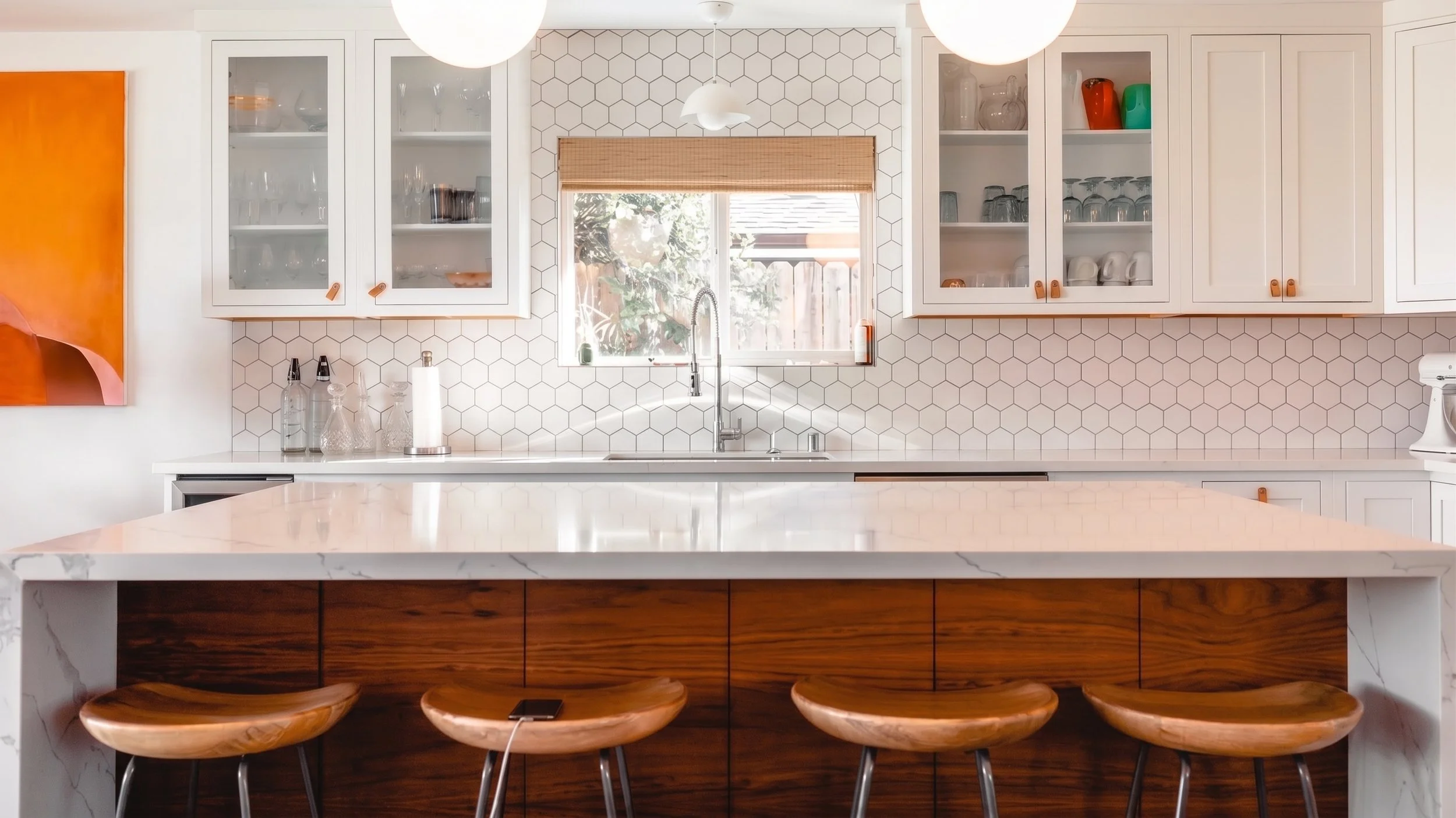
Custom Cabinets: What You're Actually Buying
Custom cabinetry starts with your kitchen's actual measurements — not the nearest standard size — and every box is built to fit that space exactly. There's no catalog constraining door styles, wood species, finishes, or hardware; the layout is designed around how you use the room, not around what a manufacturer already had tooled up to produce.
Where custom is worth it:
Irregular layouts, angled walls, low headroom, or awkward corners where "close enough" sizing leaves visible gaps or wasted space
You want a specific storage solution — a full-height pantry cabinet sized to your actual pantry needs, an appliance garage sized to your specific mixer, a corner solution that doesn't waste the corner
You care about long-term durability and want to choose the actual construction method (solid wood vs. plywood boxes, joinery type) rather than accept whatever a mass-production line uses
You want a kitchen that's genuinely unique to your home, not assembled from the same parts as thousands of other kitchens
The trade-offs:
Higher cost than semi-custom, since nothing is being produced at scale
Longer lead time — custom fabrication takes longer than pulling from an existing product line
Requires more upfront design time to get every measurement and detail right, which is also exactly what prevents costly surprises later
How to Decide
A useful way to think about it: semi-custom asks "which of our existing options fits your kitchen?" Custom asks "what does your kitchen actually need?" If your space is standard and your priorities are mostly cosmetic — door style, color, hardware — semi-custom can get you there for less. If your space has real constraints, or you're planning to be in the home long enough that getting it exactly right matters, custom is where the extra investment shows up in daily use for years afterward.
The honest answer for a lot of Toronto homeowners: older homes rarely have perfectly square, standard-dimension kitchens, which is exactly the situation semi-custom systems handle worst and custom handles best.
Where Perfecta Kitchens Fits In
We build fully custom cabinetry, manufactured locally in Toronto — every kitchen is designed around the actual room, not adapted from a fixed product line. That means your design consultation starts with real measurements of your space, not a catalog. From there, you'll see 3D renderings before anything is built, work with a dedicated project manager through fabrication and installation, and end up with cabinetry sized and built specifically for your kitchen — not the closest available match to it.
If you're trying to figure out which approach makes sense for your space, that's exactly what a design consultation is for. We'll walk your kitchen, point out where custom actually matters for your layout and where it wouldn't, and give you a straight answer rather than a sales pitch either way.